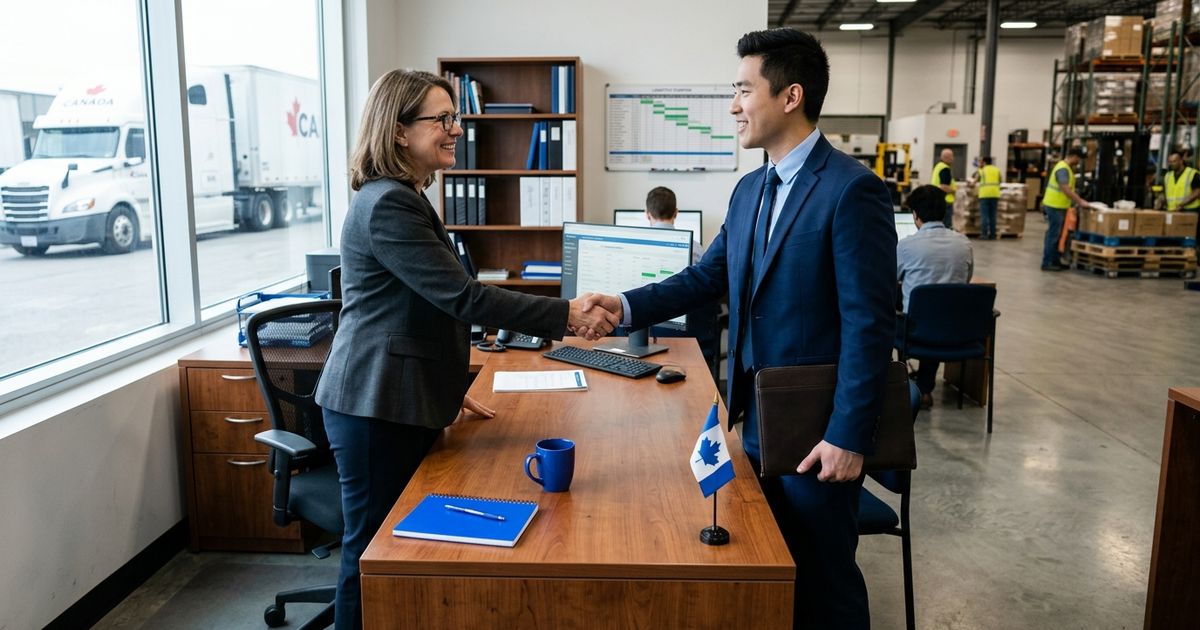
Logistics work sits at the core of how goods move from factories to store shelves, warehouses to doorsteps, and ports to distribution centres across the country. In Canada, the demand for skilled logistics workers has grown steadily as e-commerce, manufacturing, and trade activity continue to expand. Whether you are exploring your first career move or considering a switch from another trade, understanding what logistics jobs involve is a smart first step.
Quick takeaways
- Logistics jobs span warehousing, freight coordination, supply chain analysis, and management roles.
- Most entry-level positions require a high school diploma and on-the-job training, with clear paths to advance through certification.
- Canada's major logistics hubs include the Greater Toronto Area, Metro Vancouver, Calgary, and Montreal.
- The sector employs both blue-collar and white-collar workers, making it accessible to a wide range of candidates.
- Salaries vary by role, region, and experience, from entry-level warehouse work up to senior management positions.
What Are Logistics Jobs?
Defining the Logistics Sector
Logistics refers to the planning, movement, and coordination of goods and resources from origin to destination. A logistics job is any role that contributes to that process: receiving, storing, moving, tracking, or coordinating shipments and inventory. The term covers a spectrum from hands-on physical work in warehouses and loading docks to desk-based roles managing freight contracts and supply chain software.
Where Logistics Workers Fit in the Supply Chain
The supply chain is the full journey a product takes before it reaches a customer. Logistics workers operate at several points along that journey. Some handle incoming materials at a receiving dock. Others manage inventory levels in a distribution centre. Some coordinate the schedules of carriers and freight brokers, while others analyze data to reduce shipping costs and delays. Every step depends on logistics workers to keep the chain moving without interruption.
How Logistics Differs from Transportation
Transportation and logistics are closely related but not identical. Transportation refers specifically to the physical movement of goods, by truck, rail, air, or water. Logistics is the broader discipline that includes transportation but also covers storage, inventory control, order fulfillment, and coordination between suppliers, carriers, and customers. Many workers in Canada hold roles that blend both, particularly in trucking companies and freight brokerages that handle end-to-end delivery coordination.
Common Logistics Job Roles in Canada
Warehouse and Distribution Centre Workers
Warehouse roles form the foundation of the logistics sector. Common titles include:
- Warehouse associate or general labourer
- Forklift operator
- Shipping and receiving clerk
- Order picker and packer
- Inventory control clerk
These workers handle the physical movement and organization of goods within a facility. Demand is strong across Canada, particularly in industrial zones near major cities and ports.
Freight and Cargo Coordinators
Freight coordinators, also called logistics coordinators or dispatch coordinators, are the link between shippers and carriers. They book freight, negotiate rates, track shipments, and resolve delays. This is often an office-based role requiring strong communication skills and comfort with logistics software. Freight brokerage firms, trucking companies, and third-party logistics providers all hire heavily in this category.
Supply Chain Analysts
Analysts work with data to improve how goods move through a company's network. They might review carrier performance, model cost-saving scenarios, or identify bottlenecks in the fulfillment process. These roles typically require some post-secondary education and familiarity with spreadsheet tools or supply chain software. They are common in large retailers, manufacturers, and third-party logistics companies.
Logistics Managers and Supervisors
Managers and supervisors oversee teams, budgets, and operational performance. A warehouse supervisor might manage shift workers and safety compliance. A logistics manager at a manufacturer might own relationships with freight carriers and oversee inbound and outbound shipping budgets. These roles generally require several years of experience in the field, though some employers accept candidates with relevant post-secondary credentials combined with a shorter work history.
What Does a Logistics Job Actually Involve?
Day-to-Day Responsibilities
The specifics depend heavily on the role, but common tasks across logistics positions include:
- Receiving and verifying incoming shipments
- Preparing outbound orders for pickup or delivery
- Updating inventory records in a warehouse management system
- Communicating with carriers, suppliers, or internal departments
- Tracking shipments and handling exceptions such as delays or damaged goods
- Meeting productivity targets for picking, packing, or loading
Coordination and communication are central to most logistics roles. Even physical warehouse positions often require workers to interact with supervisors, drivers, and customer service teams throughout a shift.
Tools and Technology Used
Modern logistics operations rely on a range of technology. Warehouse workers use barcode scanners, handheld RF devices, and warehouse management systems such as SAP or Oracle WMS. Coordinators and analysts use transportation management systems, freight tracking portals, and standard business communication platforms. Comfort with basic software is increasingly expected even in entry-level roles, though most employers provide training on their specific systems.
Working Conditions and Schedules
Logistics is a 24-hour industry. Warehouses often run multiple shifts, including overnight and weekend schedules. Physical roles involve standing, lifting, and operating equipment for extended periods. Office-based roles follow more conventional hours, though tight deadlines and peak shipping seasons can mean additional pressure. In Canada, peak periods often align with retail seasons, particularly the fall and pre-holiday months, when volume across distribution centres increases significantly.
Qualifications and Training for Logistics Careers
Entry-Level Requirements
Most warehouse and coordinator roles require a high school diploma or equivalent. Beyond that, employers look for reliability, physical fitness for warehouse roles, and basic numeracy for tracking and inventory tasks. A valid driver's licence is an asset in many positions, and forklift certification is required for operating powered industrial trucks.
Certificates and Diplomas
Several Canadian colleges offer logistics and supply chain programs that can open doors to coordinator, analyst, and supervisory roles. Relevant credentials include:
- Certificate or diploma in supply chain and logistics management
- Business administration diploma with a logistics specialization
- Customs broker licence, administered by the Canada Border Services Agency, for import and export roles
Programs are available at institutions across the country, including community colleges in Ontario, British Columbia, Alberta, and Quebec. Some programs offer co-op placements that provide direct industry experience before graduation.
Licences and Certifications
Industry certifications can strengthen a resume and support advancement. Notable credentials in Canada include:
- SCMP (Supply Chain Management Professional) designation, offered by Supply Chain Canada
- P.Log (Professional Logistician) designation for experienced practitioners
- Transportation of Dangerous Goods (TDG) certification, required for handling regulated materials
- Workplace Hazardous Materials Information System (WHMIS) certification, widely required across warehouse environments
These certifications are not always required for entry, but they signal commitment to the profession and are commonly expected for mid-career and management roles.
Salary Ranges and Career Growth in Logistics
Entry-Level Pay
Entry-level logistics roles in Canada typically start between $17 and $22 per hour, depending on the region and type of work. Warehousing and shipping clerk positions tend to fall toward the lower end of that range, while freight coordinator trainees with some post-secondary background may start higher. Wages in Ontario and British Columbia tend to be above the national average, partly due to strong demand and higher costs of living in those markets.
Mid-Career and Management Roles
Experienced freight coordinators and logistics analysts commonly earn between $50,000 and $75,000 per year. Operations supervisors and logistics managers at mid-sized companies often earn between $65,000 and $95,000, with senior roles at large organizations or third-party logistics providers reaching well above that range. Compensation varies based on company size, sector, and individual performance.
Career Advancement Paths
Logistics offers clear advancement for workers who build skills and experience over time. A common trajectory runs from warehouse associate to inventory clerk to team lead or supervisor. On the coordinator side, workers often move from entry-level dispatch to senior coordinator and then into management. Some workers transition into customs brokerage, import and export compliance, or procurement. The field rewards both technical knowledge and soft skills like leadership and problem-solving, making it possible to advance meaningfully without a university degree.
Where to Find Logistics Jobs in Canada
Major Logistics Hubs
Canada's logistics activity is concentrated in several regions. The Greater Toronto Area is one of the largest logistics markets in the country, anchored by major distribution centres, freight terminals, and proximity to US border crossings at Windsor and Niagara. Metro Vancouver is a key gateway for Pacific trade, with port-related activity driving demand across the Lower Mainland. Calgary serves as a distribution hub for western Canada, and Montreal is a major centre for bilingual logistics operations tied to the Port of Montreal.
Industries That Hire Logistics Workers
Logistics workers are employed across a broad range of sectors, including:
- Retail and e-commerce fulfillment
- Manufacturing and automotive supply chains
- Food and beverage distribution
- Pharmaceutical and healthcare logistics
- Third-party logistics (3PL) providers
- Government and public sector procurement
The variety of industries means that experience gained in one sector often transfers well to another, giving workers flexibility over the course of their careers.
Searching for Opportunities
When looking for logistics roles, it helps to search using specific job titles relevant to your experience and target position. Specialized job boards focused on transportation and logistics often surface relevant postings faster than general platforms. You can browse current openings across the country at TransportationCareers.ca, which is built specifically for transportation and logistics workers in Canada. Filtering by region, role type, and experience level helps narrow results to the most relevant opportunities.
Networking with supervisors, coordinators, and dispatchers through industry groups can also open doors before a formal posting appears. Many logistics roles, particularly at smaller carriers and freight brokerages, are filled through referrals.
FAQ
What is a logistics job?
A logistics job is any role involved in the movement, storage, coordination, or tracking of goods along a supply chain. This includes physical roles like warehouse associate and forklift operator, as well as office-based roles like freight coordinator, supply chain analyst, and logistics manager. The term covers a wide range of positions across warehousing, transportation, fulfillment, and operations management.
What qualifications do I need to work in logistics?
Most entry-level logistics positions require a high school diploma and, depending on the role, a valid driver's licence or forklift certification. Warehousing and shipping roles typically provide on-the-job training for specific systems and equipment. For coordinator, analyst, or management positions, a college diploma in supply chain management or business administration can be an advantage, though relevant experience carries similar weight with many employers.
Are logistics jobs in demand in Canada?
Yes. The logistics sector has seen consistent hiring activity across Canada, driven by growth in e-commerce fulfillment, ongoing trade activity, and the need to replace retiring workers. Roles in warehousing, transportation coordination, and supply chain analysis appear regularly on job boards targeting the transportation and logistics sectors.
What is the difference between a logistics job and a freight job?
The terms overlap significantly. Freight jobs often refer specifically to roles involved in moving goods by truck, rail, air, or sea, such as freight broker, freight coordinator, or freight driver. Logistics jobs is a broader term that includes freight work but also covers warehousing, inventory management, supply chain analysis, and operations management. Many job postings use both terms, particularly at companies that handle end-to-end shipping.
Can I work in logistics without post-secondary education?
Yes. Many logistics workers enter the field directly from high school, starting in warehouse, shipping and receiving, or dispatch support roles and advancing through experience. Post-secondary credentials tend to matter more for analyst and management positions, but they are not always required. Industry certifications such as the SCMP designation can be pursued while working, allowing candidates to build credentials without pausing their career.
Where can I find logistics job postings in Canada?
Specialized job boards focused on transportation and logistics are often more targeted than general job search platforms. TransportationCareers.ca is a Canada-focused platform where transportation and logistics workers can search listings across the country, including warehouse, coordinator, analyst, and management roles.
Logistics careers offer a practical path for Canadians looking for stable employment with real advancement potential. Whether your goal is a hands-on role in a distribution centre or a desk-based coordination position, the sector has openings at multiple skill levels and across every province. Ready to take the next step? Visit transportationcareers.ca to explore job opportunities.